
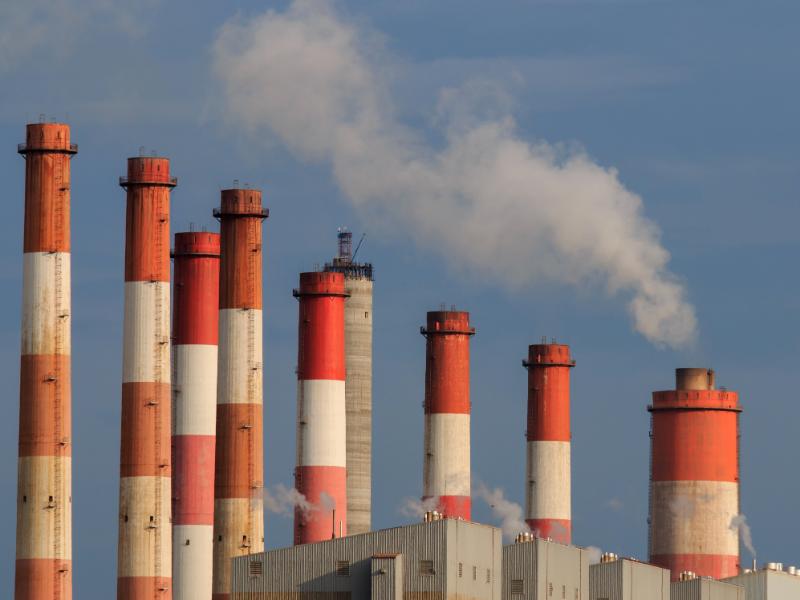
Industrial facilities in Pennsylvania must follow air quality and emissions standards set by the Pennsylvania Department of Environmental Protection (PA DEP) and the Allegheny County Health Department (ACHD). Proper air testing keeps your emissions data accurate and helps avoid Notices of Violation (NOVs), civil penalties, and operational downtime.
How does accurate environmental testing protect Pennsylvania facilities from PA DEP penalties?
Accurate testing protects your business by proving your facility adheres to PA DEP air permit limits, Title V standards, and state Plan Approvals. Partnering with an experienced third-party testing firm provides certified, EPA-compliant emissions data that proves adherence.
The best environmental consulting firms gather data through these air quality tests:
- Stack Testing: Certified field engineers measure criteria pollutants, particulate matter, and hazardous air pollutants directly from exhaust flues to verify control equipment efficiency and prove compliance with PA DEP permit limits.
- Monitoring Audits: Routine Relative Accuracy Test Audits (RATA) validate continuous emission monitoring systems (CEMS) hardware against EPA reference methods to ensure automated compliance data remains legally defensible.
- Ambient Air Sampling: Fence-line and perimeter air quality monitoring tracks airborne emissions surrounding stationary sources to document surrounding environmental safety and satisfy local community standards.
At Impact Compliance & Testing, we offer certified data to industrial facilities, chemical plants, and similar operations with certified data. To get accurate environmental testing that offers certainty, call us at (517) 268-0043 or contact us online!
How is a Professional Air Quality Environmental Test Conducted?
Your environmental test includes pre-test protocol reviews, deploying EPA-approved reference sampling methods, and submitting certified emission reports to state regulators. This detailed approach make sure the source testing, RATA audits, and fuel analysis satisfy PA DEP compliance criteria.
Experienced environmental consultants guide your team through these three testing phases:
Pre-Test Protocol & Agency Coordination
Before testing starts, engineers create a test protocol that outlines sampling locations, operational load targets, and EPA reference methods. Submitting this protocol to the PA DEP in advance makes sure that state inspectors agree on the testing procedures ahead of time.
On-Site Execution & Data Collection
During testing, certified field technicians install sampling probes and analyzer trains to your exhaust flues or stacks. Everything is done as your facility operates at normal or maximum production to capture accurate baseline emissions data.
Data Analysis & Certified Compliance Reporting
Collected air samples and analyzer logs undergo strict quality assurance checks. The environmental test report offers clear emission calculations, system calibration sheets, and regulatory comparisons for submission to state authorities.
When Should PA Industrial Facilities Schedule an Environmental Test?
These tests are required whenever you’re renewing operating permits, modifying combustion equipment, installing new production lines, or fulfilling routine regulatory compliance. Testing gives you reliable emissions baselines that help produce smooth agency approvals and protect your facility’s growth.
If you’re operating under a Title V or a synthetic minor permit in Pennsylvania, these operational milestones require scheduling an air emissions test:
- Equipment Installations & Modifications: Installing a new boiler, generator, oxidizer, or manufacturing line needs a pre-operational or post-installation environmental test to satisfy PA DEP plan approval requirements.
- Mandatory Title V & RATA Permit Cycles: Facilities operating under Title V operating permits must perform periodic Relative Accuracy Test Audits (RATA) on Continuous Emission Monitoring Systems (CEMS) to verify instrument accuracy.
- Control Device Efficiency Evaluations: Testing the destruction efficiency of enclosed flares, thermal oxidizers, or scrubbers makes sure your pollution control hardware is operating at peak performance before compliance audits.
- Proactive Production Scale-Ups: Before increasing plant throughput or operating hours, an environmental test establishes baseline emissions data to confirm your facility won’t exceed thresholds.
PA Industrial Operations Trust Impact Compliance & Testing
Don’t let unverified emissions data or inaccurate stack readings jeopardize your operating permits. Impact Compliance & Testing provides the data you need to conduct an environmental test and secure compliance.
Call (517) 268-0043 or contact us online to schedule your environmental test and protect your facility’s operating permits!